
photo-1504384308090-c894fdcc538d

How to Generate High-Quality Leads Online for Your Business

Introduction

Generating leads is one of the biggest challenges businesses face in the digital world. Getting traffic is easy, but turning that traffic into actual customers requires strategy.

High-quality leads are people who are genuinely interested in your services and more likely to convert.

This blog will show you how to attract, engage, and convert the right audience.


What Is Lead Generation?

Lead generation is the process of attracting potential customers and capturing their information, such as:

  • Name
  • Email
  • Phone number

The goal is to turn these leads into paying customers.


Why Quality Matters More Than Quantity

Not all leads are equal.

A large number of low-quality leads:

  • Waste time
  • Reduce conversion rates
  • Increase costs

High-quality leads:

  • Convert faster
  • Require less effort
  • Deliver better ROI

1. Create a High-Converting Website

Website Conversion

Your website is your digital storefront.

Key Elements:

  • Clear messaging
  • Fast loading speed
  • Mobile-friendly design
  • Strong call-to-action

A well-designed website can significantly increase conversions.


2. Use Landing Pages

Landing pages are designed for one specific goal: conversion.

Best Practices:

  • Focus on one offer
  • Remove distractions
  • Use compelling headlines

Landing pages outperform regular pages in lead generation.


3. Offer Valuable Content

Content Strategy

People do not give their information for free. You need to offer value.

Examples:

  • Free guides
  • Ebooks
  • Checklists
  • Webinars

This builds trust and encourages users to share their details.


4. Run Targeted Ads

Paid advertising helps you reach the right audience quickly.

Tips:

  • Use precise targeting
  • Test different creatives
  • Optimize campaigns regularly

The better your targeting, the higher your lead quality.


5. Leverage Social Media

Social media is a powerful lead generation tool.

Strategies:

  • Share valuable content
  • Engage with followers
  • Use lead generation ads

Consistency is key to building trust.


6. Use Email Marketing

Email helps you nurture leads over time.

Effective Techniques:

  • Personalized emails
  • Automated sequences
  • Regular follow-ups

This keeps your brand top-of-mind.


7. Optimize for SEO

SEO helps attract users who are actively searching for your services.

These leads are often:

  • Highly targeted
  • Ready to convert

Organic traffic is one of the best sources of quality leads.


8. Add Strong Call-to-Actions (CTAs)

Your CTA tells users what to do next.

Examples:

  • Get a free quote
  • Book a consultation
  • Download now

Clear and compelling CTAs improve conversions.


Common Mistakes to Avoid

1. Weak Offers

If your offer is not valuable, users will not convert.

2. Poor User Experience

Slow or confusing websites drive users away.

3. No Follow-Up

Leads go cold if not nurtured.


Conclusion

Generating high-quality leads is not about luck. It is about using the right strategies consistently.

By focusing on value, targeting, and optimization, businesses can attract the right audience and turn them into loyal customers.


photo-1519389950473-47ba0277781c

SEO vs Paid Ads – Which One Is Better for Your Business?

Introduction

SEO vs PPC

When it comes to digital marketing, one of the biggest questions businesses face is whether to invest in Search Engine Optimization (SEO) or Paid Per Click (PPC) advertising.

Both strategies can generate traffic, leads, and revenue. However, they work in very different ways and serve different purposes.

Understanding the strengths and limitations of each approach is essential if you want to maximize your marketing budget and achieve long-term growth.


What Is SEO?

SEO is the process of optimizing your website to rank organically on search engines like Google.

Instead of paying for traffic, SEO focuses on earning visibility through:

  • High-quality content
  • Keyword optimization
  • Technical improvements
  • Backlinks

SEO is a long-term strategy that builds authority over time.


What Are Paid Ads?

Paid advertising, often referred to as PPC (Pay-Per-Click), allows you to place ads on search engines and social media platforms.

You pay only when someone clicks on your ad.

Common Platforms:

  • Google Ads
  • Facebook Ads
  • Instagram Ads

Paid ads provide instant visibility and fast results.


Key Differences Between SEO and Paid Ads

1. Speed of Results

  • SEO: Takes time to see results
  • PPC: Immediate traffic

2. Cost Structure

  • SEO: Investment in content and optimization
  • PPC: Pay for each click

3. Sustainability

  • SEO: Long-term traffic even after stopping efforts
  • PPC: Traffic stops when ads stop

Advantages of SEO

1. Long-Term Growth

Once your website ranks, it continues to attract traffic.

2. Higher Trust

Users trust organic results more than ads.

3. Cost Efficiency Over Time

No need to pay per click.


Advantages of Paid Ads

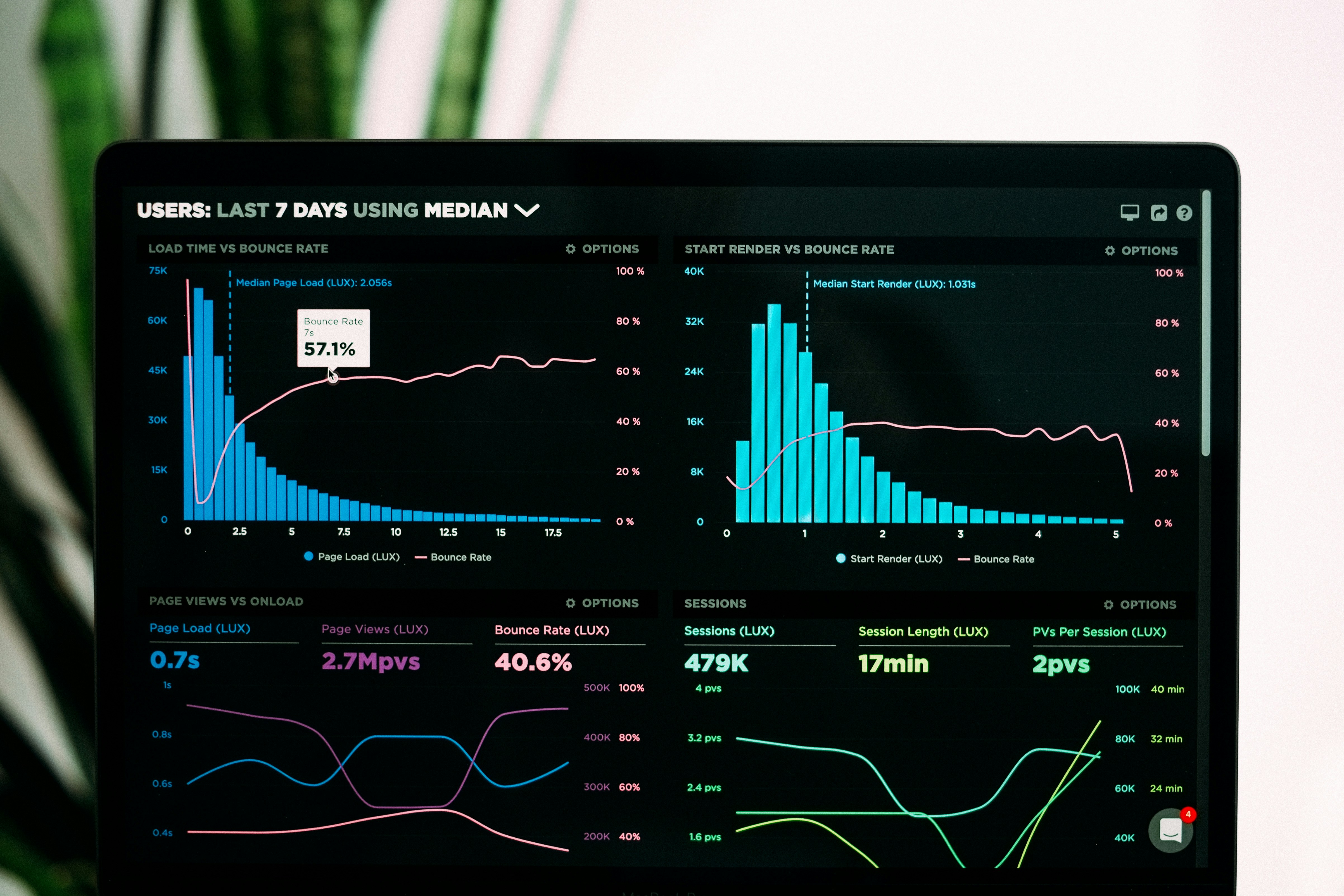
Paid Ads Dashboard

1. Instant Results

Perfect for new businesses or product launches.

2. Precise Targeting

Target users based on demographics, interests, and behavior.

3. Scalability

Increase budget to scale results quickly.


When Should You Use SEO?

SEO is ideal when:

  • You want long-term growth
  • You have time to invest
  • You want consistent organic traffic

It is especially useful for blogs, service pages, and evergreen content.


When Should You Use Paid Ads?

Paid ads are best when:

  • You need quick results
  • You are launching a product
  • You want to test offers

They are also effective for retargeting potential customers.


The Best Strategy: Combine Both

The most successful businesses do not choose one over the other. They combine both strategies.

Example Approach:

  • Use PPC for immediate traffic
  • Use SEO for long-term growth

This balanced strategy ensures:

  • Short-term results
  • Long-term sustainability

Common Mistakes to Avoid

1. Relying Only on Ads

This can become expensive over time.

2. Ignoring SEO

You miss out on free, consistent traffic.

3. Poor Targeting in Ads

Wasted budget with low conversions.


Conclusion

Business Decision

SEO and Paid Ads are not competitors. They are complementary strategies.

If you want fast results, start with paid ads. If you want sustainable growth, invest in SEO. The real power lies in using both effectively.

Top 10 digital marketing strategies for 2026

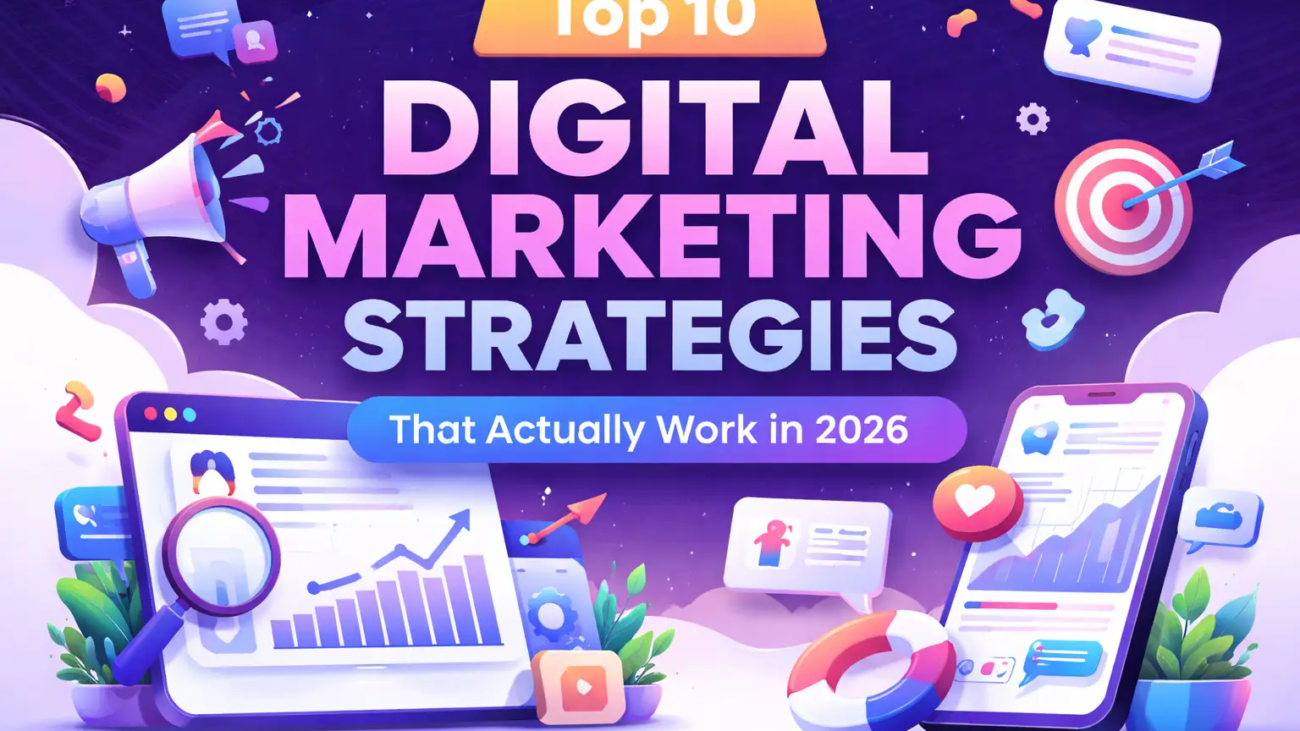
Top 10 Digital Marketing Strategies That Actually Work in 2026

Introduction

Digital marketing is constantly evolving. What worked a few years ago is no longer enough to compete in today’s fast-paced digital environment. Businesses that rely on outdated tactics often struggle to generate leads, while those using modern strategies consistently outperform their competition.

The challenge is not a lack of options—it is choosing the right strategies that actually deliver results.

In this blog, we will break down the top 10 digital marketing strategies that are proven to work in 2026 and beyond.


1. Search Engine Optimization (SEO)

SEO remains one of the most powerful long-term strategies.

Ranking on search engines allows your business to attract organic traffic without paying for every click.

What Works Now:

  • High-quality, long-form content
  • Search intent optimization
  • Fast-loading websites
  • Mobile-first design

SEO is not about tricking algorithms anymore. It is about delivering real value.


2. Short-Form Video Content

Short-form videos dominate platforms like Instagram Reels, TikTok, and YouTube Shorts.

These videos:

  • Grab attention quickly
  • Increase engagement
  • Reach wider audiences

Businesses that invest in video content see higher conversion rates compared to static posts.


3. Pay-Per-Click Advertising (PPC)

PPC Ads

PPC is ideal for businesses looking for immediate results.

Why It Works:

  • Instant visibility
  • Precise targeting
  • Scalable campaigns

When optimized properly, PPC campaigns can generate high-quality leads at a predictable cost.


4. Content Marketing

Content marketing continues to be the foundation of digital success.

Effective Content Types:

  • Blog posts
  • Case studies
  • Guides
  • Educational videos

Good content builds trust and positions your brand as an authority in your industry.


5. Social Media Marketing

Social Media

Social media is no longer just a branding tool. It is now a direct sales channel.

Winning Tactics:

  • Consistency over perfection
  • Authentic storytelling
  • Audience interaction
  • Trend adaptation

Brands that engage with their audience build stronger relationships and loyalty.


6. Email Marketing Automation

Email marketing is far from outdated. In fact, it delivers one of the highest returns on investment.

What Makes It Effective:

  • Personalized messaging
  • Automated sequences
  • Lead nurturing

Automation allows you to stay connected with your audience without manual effort.


7. Influencer Marketing

Influencer marketing has evolved into a powerful strategy for building trust.

People trust recommendations from individuals more than brands.

Key Approach:

  • Partner with niche influencers
  • Focus on authenticity
  • Avoid overly promotional content

Micro-influencers often deliver better engagement than large accounts.


8. Conversion Rate Optimization (CRO)

Driving traffic is only half the job. Converting visitors into customers is where real growth happens.

Optimization Techniques:

  • Clear call-to-actions
  • Faster page speed
  • Better user experience
  • A/B testing

Small improvements can lead to significant increases in revenue.


9. Local SEO

Local SEO

Local SEO is essential for businesses targeting specific areas.

Important Factors:

  • Google Business Profile optimization
  • Local keywords
  • Customer reviews

If someone searches for services near them, your business should appear first.


10. AI-Powered Marketing

Artificial intelligence is transforming how marketing works.

Applications:

  • Chatbots
  • Content generation
  • Customer insights
  • Predictive analytics

Businesses using AI gain a competitive advantage by making smarter decisions faster.


Common Mistakes to Avoid

Even with the right strategies, mistakes can limit your success.

1. Trying Everything at Once

Focus on a few strategies and execute them well.

2. Ignoring Data

Decisions should be based on analytics, not assumptions.

3. Lack of Consistency

Marketing requires ongoing effort, not one-time campaigns.


How to Choose the Right Strategy

Not every strategy will work for every business.

Ask Yourself:

  • Who is my target audience?
  • Where do they spend their time?
  • What are my business goals?

The best strategy is the one that aligns with your audience and objectives.


Conclusion

Marketing Growth

Digital marketing success does not come from doing everything. It comes from doing the right things consistently and effectively.

By focusing on proven strategies like SEO, video content, PPC, and personalization, businesses can build a strong online presence and achieve sustainable growth.

Digital marketing guide for 2026

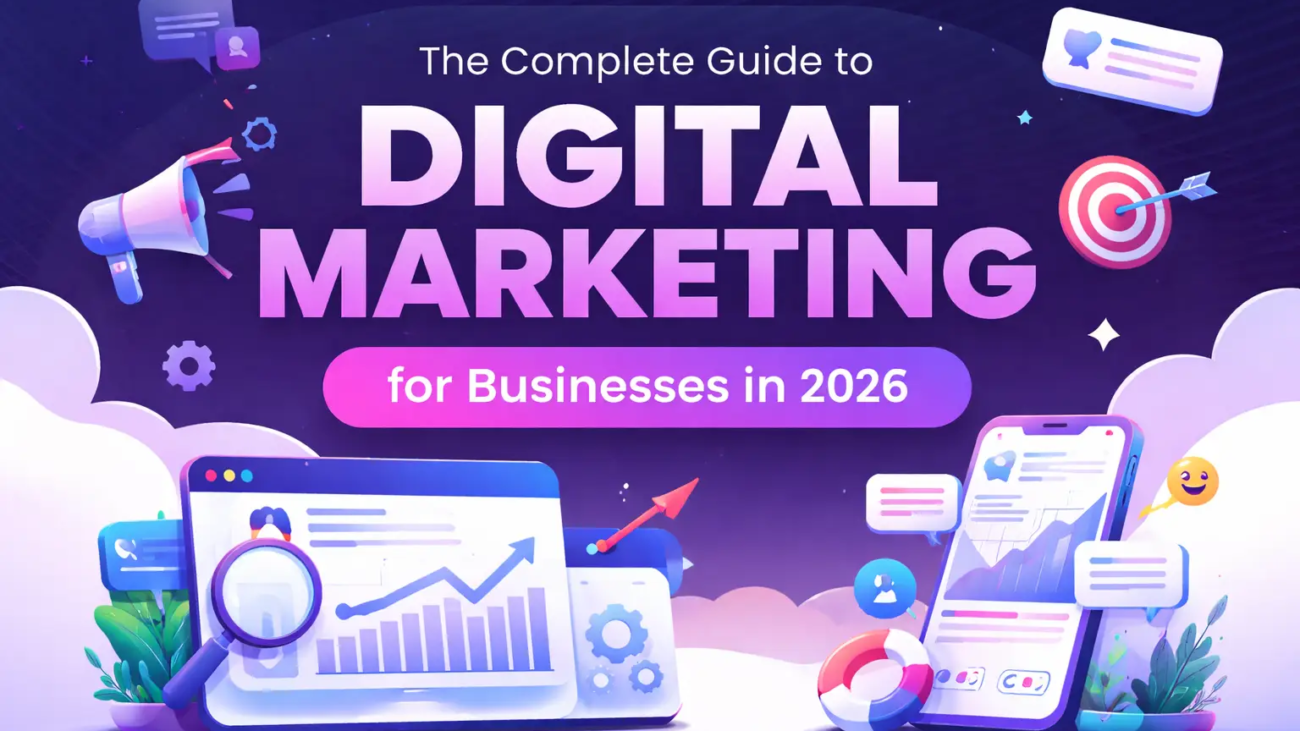
The Complete Guide to Digital Marketing for Businesses in 2026

Introduction

Digital marketing is no longer optional. It has become the backbone of how businesses grow, compete, and survive in a highly connected world. Whether you are a startup, a local business, or an established company, your online presence determines how customers perceive and engage with your brand.

But here’s the problem: most businesses either don’t know where to start or waste money on the wrong strategies.

This guide will walk you through what digital marketing really is, what works today, and how your business can use it effectively.


What Is Digital Marketing?

Digital marketing refers to promoting products or services using online channels such as search engines, social media, email, and websites.

Unlike traditional marketing, digital marketing allows you to:

  • Target specific audiences
  • Track performance in real time
  • Adjust strategies instantly
  • Achieve better ROI

At its core, digital marketing is about connecting the right message with the right audience at the right time.


Why Digital Marketing Is Essential in 2026

Consumer behavior has changed dramatically. Before making a purchase, people:

  • Search on Google
  • Check reviews
  • Visit websites
  • Browse social media

If your business is not visible online, you are invisible to potential customers.

Key Benefits:

  • Global reach
  • Cost-effective marketing
  • Measurable results
  • Better engagement

Search Engine Optimization (SEO)

SEO is the process of improving your website so it ranks higher on search engines.

When someone searches for services you offer, your goal is to appear on the first page.

Key Elements:

  • Keyword research
  • On-page optimization
  • Technical SEO
  • Backlinks

SEO is a long-term strategy, but it delivers consistent and high-quality traffic.


Social Media Marketing

Social Media Marketing

Social media platforms are powerful tools to build brand awareness and connect with your audience.

Platforms include:

  • Instagram
  • Facebook
  • LinkedIn
  • TikTok

What Works Today:

  • Short-form videos
  • Consistent posting
  • Authentic content
  • Storytelling

Social media is not just about posting content. It is about building relationships.


Pay-Per-Click Advertising (PPC)

PPC Advertising

PPC allows you to run ads and pay only when someone clicks.

Advantages:

  • Instant traffic
  • Highly targeted audience
  • Scalable campaigns

It is one of the fastest ways to generate leads if done correctly.


Content Marketing

Content is the foundation of digital marketing.

This includes:

  • Blogs
  • Videos
  • Infographics
  • Case studies

High-quality content builds trust, authority, and long-term visibility.


Email Marketing

Email marketing remains one of the highest ROI channels.

It helps you:

  • Nurture leads
  • Retain customers
  • Promote offers

A well-crafted email strategy can significantly boost conversions.


Common Mistakes Businesses Make

Many businesses fail because they approach digital marketing incorrectly.

1. No Clear Strategy

Posting randomly without a plan leads to poor results.

2. Ignoring SEO

Relying only on ads without organic growth is expensive.

3. Inconsistent Branding

Your message and visuals should be consistent.

4. Not Tracking Results

If you are not analyzing data, you are guessing.


How to Build a Winning Strategy

Step 1: Define Your Goals

Know what you want to achieve.

Step 2: Identify Your Audience

Understand their needs and behavior.

Step 3: Choose the Right Channels

Focus where your audience is active.

Step 4: Create Valuable Content

Provide solutions, not just promotions.

Step 5: Track and Optimize

Continuously improve your strategy.


The Future of Digital Marketing

Digital marketing is evolving rapidly.

Trends to Watch:

  • AI-powered marketing
  • Voice search
  • Video-first content
  • Personalization

Businesses that adapt will lead the market.


Conclusion

Business Growth

Digital marketing is not about doing everything. It is about doing the right things consistently.

A strong online presence can transform your business, generate leads, and create long-term growth.